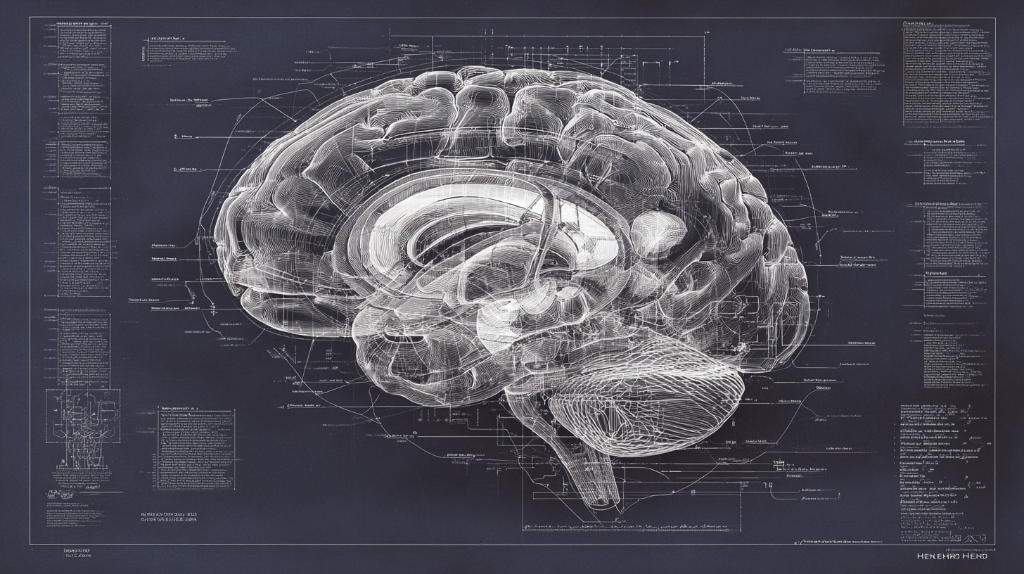
Empirical Evidence — premium research facility

Empirical Evidence

Clinical Neurobiology

Applied neurobiology and structural outcomes.

The Neuro-Somatic Systems Audit

High-performing systems do not fail overnight; they degrade through invisible, compounding micro-friction. This audit is a forensic evaluation of your biological scaffolding. Review the structural markers below based on your observations of the last 30 days.

01

The Transition Blur

Inability to down-regulate cognitive speed when shifting from high-stakes work to personal time.

02

Allostatic Load

The "High Alert" default. The body loses the ability to distinguish between a short-term crisis and daily life.

03

Irrational Acceleration

A sense of "false urgency" compelling impulsive responses without the cognitive headroom for depth.

04

The Limbic Hijack

Physical "Red-Line" markers (heat in the neck/face, narrowed vision) preceding a total loss of objective logic.

05

The Somatic Loop

Immediate physical distress triggered by a stressful thought, which then fuels more aggressive thoughts.

06

Somatic Holding Patterns

Unconsciously maintaining a defensive physical posture (clenched jaw, locked diaphragm) during resting states.

07

Emotional Granularity

Operating with a baseline of generalized brain fog or blunt overwhelm without a specific root cause.

08

The Content Decoy

Locked in exhausting, circular debates about semantics rather than addressing the underlying structural issue.

09

The Tactical Withdrawal

An immediate biological instinct to isolate, cancel plans, and become highly transactional when stress peaks.

10

The Implementation Gap

Possessing the high-level intellectual knowledge to optimize performance, but experiencing a biological "veto" when attempting execution.

Structural Interventions & Outcomes

We do not rely on subjective testimonials. The NeuroHub operates on structural metrics and verifiable neuroplasticity. Below are anonymized records of biological interventions within high-friction enterprise environments.

Fortune 500 Tech Executive case study
CASE STUDY 01

The Tech Executive

Subject

Fortune 500 Enterprise Board Member

The Baseline Analysis

Chronic presentation of the "Defensive Glitch," severe Prefrontal Starvation, and extreme autonomic reactions to board-level feedback. Subject was nearing mandatory medical leave.

The Intervention

14-Day Cognitive Architecture Installation + 6 weeks of Sovereign Proximity (Live Boardroom Sparring).

The Structural ROI

Successfully reprogrammed the Default Mode Network (DMN). Eradicated systemic communication friction. Zero medical leave required. Subject was promoted to CEO within 14 months of baseline reset.

CASE STUDY 02

The M&A Director

Subject

Enterprise Integration Lead

The Baseline Analysis

Severe autonomic volatility following hostile meetings.

The Intervention

Tracked a 21-day stabilization of Heart Rate Variability (HRV). Biological volatility decreased, allowing the subject to navigate high-friction negotiations without a subsequent system crash.

The Structural ROI

21-day stabilization of Heart Rate Variability (HRV). Biological volatility decreased, preventing system crash post-negotiation.

Kintsugi gold fracture in concrete — M&A Director case study
Vast concrete room with large windows — Operations Chief case study
CASE STUDY 03

The Operations Chief

Subject

Global COO

The Baseline Analysis

Immediate loss of cognitive control during operational crises.

The Intervention

Measurable expansion of cognitive bandwidth. Subject absorbed compounding friction points without triggering a sympathetic threat response, maintaining structural control.

The Structural ROI

Measurable expansion of cognitive bandwidth. Subject successfully absorbed compounding friction points without triggering sympathetic threat response.

The Data Vault

Proprietary whitepapers. Peer-reviewed frameworks translated into actionable infrastructure.

Research Library

The Bio-Psychosocial Research Library

01
Biological Hardware
WP — I

Allostatic Overload

The Structural Cost of Chronic Sympathetic Activation in High-Stakes Environments

Chronic sympathetic activation imposes a measurable "Structural Tax" on the prefrontal cortex, metabolic efficiency, and organizational decision architecture. This paper outlines the hardware approach to identifying how sustained ANS activation degrades decision-making, immunity, and organizational longevity.

ANSCortisolNeural AtrophySystemic Friction
Version 2.1 — Classified
02
Environmental Context
WP — II

Architectural Somatics

Brutalist Materialism: Raw Concrete as a Somatic Anchor for Limbic Regulation

Raw brutalist materials provide high-fidelity somatic anchoring, interrupting internal stress loops and facilitating parasympathetic engagement through tactile, acoustic, and visual permanence.

Somatic AnchorsLimbic DriftAcoustic DensityVisual Permanence
Version 1.4 — Classified
03
Cognitive Software
WP — III

The Adaptive Agency Protocol

Neural Entrainment and the Architecture of Agency: A Proprietary Framework for Executive Regulation

In high-volatility environments, the primary failure point is a failure of Adaptive Agency. This paper outlines the proprietary Tri-Layer Scaffolding Protocol, moving human systems from "Reactive Survival" to "Strategic Agency" through Neural Coherence.

Adaptive AgencyNeural EntrainmentLimbic HijackExecutive Regulation
Version 3.0 — Classified
04
Hardware Before Software
WP — IV

Hardware Before Software

Why Biological Stabilisation Must Precede Cognitive Intervention

The primary failure of corporate wellness initiatives is a fundamental sequencing error: attempting to install psychological software onto an unstable biological operating system. This paper presents The NeuroHub's evidence-based sequencing protocol.

Biological SequencingCognitive InterventionNervous SystemProtocol
Version 1.0 — Classified
05
Cognitive Software / Biological Hardware Integration
WP — V

Psychological Integration and Adult Cognitive Development

The "Space vs. Room" Architecture in Executive Systems

In high-volatility environments, an executive's primary limitation is not a lack of external data, but a failure of internal data filtration. Only 1 in 250,000 bits of sensory information reaches conscious executive function. This paper outlines the Reticular Recalibration, the Space vs. Room architecture separating archival integration from operational capacity, synaptic pruning, and the Subject-Object Shift — moving executives from reactive survival to metacognitive objectivity.

RAS RecalibrationSynaptic PruningSubject-Object ShiftMetacognitive Architecture
Version 1.0 — Classified
08
Clinical Baselines / Systemic Optimization
WP — VIII

The Pathology Baseline

The Structural Failure of the Modern Psychological Operating System

Modern clinical psychology operates on a fundamentally flawed diagnostic baseline — the "disease model." For seven decades, the industry has defined the goal as the mere absence of pathology, omitting the positive vector required for high performance. This paper outlines the historical drift, the biological hazard of neutrality, and the necessity of engineering the positive (+10) state.

Disease ModelPositive PsychologyAllostatic CapacityMetacognitive Sovereignty
Version 1.0 — Classified
12
Neurodevelopmental Context
WP — XII

The Legacy Hardware

Synaptic Pruning, The Orphan Architecture, and the Myth of Adulthood

Modern society views adulthood as a biological finish line. In reality, it is merely a legal construct layered over childhood neuro-infrastructure. This paper isolates the structural mechanics of brain development to demonstrate how early environments physically architect the human system. By mapping the divergence between a regulated baseline and an overgrown amygdala, we establish why volatile environments create highly competent, metabolically exhausted humans. We define the operational tax of neuroplasticity required to consciously upgrade this legacy hardware in both strategic business execution and parenthood, proving that your survival adaptations do not have to become your permanent identity or the baseline for the next generation.

Synaptic PruningNeurodevelopmentAmygdala HypertrophyGenerational Transmission
Version 4.0 — Classified
13
Metacognitive Education / Systems Baseline
WP — XIII

Science Dissected

Demystifying the Scientific Process and the Democratisation of Human Biology

Modern society has engineered a massive, artificial barrier between the scientific community and the general public. Science has been culturally gatekept, framed as a domain reserved strictly for academics. This paper dismantles that delusion.

NeuroplasticityMetacognitionBiological OwnershipIntellectual Agency
Version 1.2 — Classified
14
Universal Somatic Architecture / Systems Leadership
WP — XIV

The Laws of Human Kinetics

Mastering the Bio-Psychosocial Engine of Human Behavior and Leadership

Modern society treats human behavior and decision-making as an intellectual exercise, assuming that logic alone dictates actions. In reality, every human choice, reaction, and interaction is governed by an underlying physical and biological engine. This paper isolates the structural mechanics of Human Kinetics—the energy transfer between internal biological stress and observable behavioral output.

Human KineticsBio-Psychosocial EngineSomatic ArchitectureKinetic Dominance
Version 2.0 — Classified
15
New
Executive Bandwidth / Neuro-Architecture
WP — XV

The Neuroplasticity of Complexity

The Accountability of Biological Ownership and the Friction of Mastery

A pervasive objection within high-performance cohorts is that human biology and systems architecture are "too complex" for practical leadership application. At The Neuro-Hub, we identify this objection not as a deficit of intelligence, but as a symptom of cognitive lethargy and a profound avoidance of accountability. This paper outlines the paradox of cognitive complexity, the metabolic cost of choosing ignorance over mastery, and how the friction of learning the system is the exact biological mechanism required to upgrade it.

Hebbian PlasticityMetacognitive CapacityAllostatic LoadBiological Ownership
Version 1.0 — Classified
09
New
Limbic Regulation / Cognitive Hardware Diagnostics
WP — IX

Emotion vs. Logic

The Counterpart Law and Prefrontal Inhibition in Systemic Regulation

The modern wellness and therapeutic industries operate on an unbalanced, hyper-emotional paradigm. Treating an emotionally overwhelmed system exclusively with more emotion ignores half of the human hardware. The biological antidote to an Amygdala hijack is not more empathy; it is cold, structural logic. This paper outlines the Counterpart Law and the mechanism of Top-Down Prefrontal Inhibition.

Counterpart LawPrefrontal InhibitionLimbic RegulationGABA
Version 1.0 — Classified
Academic Archive

Peer-Reviewed on ResearchGate

Our clinical whitepapers are archived and indexed within the broader scientific community. Explore our published research on ResearchGate.

View Research Profile
The NeuroHubBio-psychosocial systems

Engineering structural resilience through biological optimization, psychological restructuring, and environmental design.

Designed by a Master Builder, Engineered by a Scientist.

The NeuroHub is positioned at the intersection of European innovation and Mediterranean resilience, providing strategic scaffolding for corporate ecosystems and the individual.

ResearchGate Profile
© 2026 The NeuroHub. All Rights Reserved.

'The NeuroHub Blueprint,' 'The Sovereign Toolkit,' 'The Biological Audit,' and 'The NeuroSpatial Directive' are proprietary clinical frameworks of The NeuroHub. Unauthorized reproduction or use in corporate training without explicit written licensing is strictly prohibited.